
The Best Forensic SEO Tools & Software
The best forensic SEO tools are the ones that give you raw, unfiltered evidence rather than a summarized dashboard — server log analyzers, crawlers that can diff two crawls, backlink tools with historical data, and archive tools that show what a page actually looked like on a given date. Forensic work depends on evidence you can point to, so the right tool for the job is usually the one that gets you closest to the source data, not the one with the prettiest report.
This isn’t a “top 20 SEO tools” roundup. It’s the specific stack we reach for at Salterra when a case requires investigation rather than optimization, organized by what each tool is actually good for finding.
Google Search Console: The Non-Negotiable Starting Point
Search Console is the first stop in nearly every forensic case, for one reason no third-party tool can replicate: it’s data straight from Google about how Google is treating the site. The Performance report, filtered to query and page level, shows impressions and clicks separately — critical for distinguishing a real ranking loss from a click-through or AI Overview issue. The URL Inspection tool confirms indexation status directly. The Manual Actions report is the only authoritative source for whether a penalty has actually been applied. And the Core Web Vitals and Index Coverage reports catch technical regressions that wouldn’t otherwise surface until traffic had already dropped.
The limitation: Search Console’s default UI only shows 16 months of history, and it aggregates some data in ways that hide detail. For longer historical analysis, export data regularly via the Search Console API or a connected BigQuery export — a step many sites skip until they need historical data that no longer exists.
Server Log File Analyzers
Log files are the single highest-value evidence source in forensic SEO because they show exactly what Googlebot requested, when, and what response it got — not a delayed, summarized version filtered through Google’s own reporting. Screaming Frog Log File Analyser is the accessible entry point: it parses raw access logs, verifies bots by reverse DNS to filter out spoofed traffic, and surfaces crawl frequency by URL, status code patterns, and orphaned pages Googlebot is still hitting despite no longer being linked internally.
For larger sites or agencies running frequent forensic work, a more robust log analysis setup (Splunk, an ELK stack, or a BigQuery pipeline fed from raw server logs) pays for itself. The specific tool matters less than having log access at all — plenty of forensic cases stall out simply because the client’s hosting setup doesn’t retain logs long enough to cover the investigation window, which is worth flagging to clients before an incident happens, not after.
Crawlers for Diffing Site Structure
Screaming Frog SEO Spider and Sitebulb both do the core job forensic SEO needs from a crawler: capture a full site’s technical state at a point in time so it can be compared against a later or earlier crawl. If a prior crawl exists from before the symptom appeared, diffing it against a current crawl quickly surfaces changes to titles, canonicals, meta robots directives, internal link counts, and status codes across the entire site — far faster than manually checking individual pages.
The forensic value here depends entirely on having a “before” snapshot. This is a strong argument for running and archiving full-site crawls on a recurring schedule even when nothing appears to be wrong — the crawl you save today is the evidence you’ll need if something breaks in six months.
The Wayback Machine
The Internet Archive’s Wayback Machine is free, chronically underused, and often decisive. When no prior crawl or CMS revision history exists, Wayback snapshots are frequently the only way to see what a page’s content, headings, and even meta tags looked like before a redesign or content edit. It’s not comprehensive — snapshot frequency varies by site and page — but for any page with even sporadic historical crawls, it’s worth checking before assuming the evidence doesn’t exist.
Backlink Analysis Tools
Ahrefs and Semrush both maintain large historical backlink indexes, which makes them the right tools for spotting sudden referring domain loss, unnatural link spikes, or a disavow file that’s gone stale. Ahrefs’ historical index tends to go deeper for older links; Semrush’s Backlink Audit tool is built more directly around flagging toxic patterns for disavow decisions. For forensic work specifically, the feature that matters most is the ability to filter link gains and losses to a specific date range — most standard SEO use of these tools doesn’t require that level of historical precision, but forensic investigation does.
Algorithm Update Tracking
Semrush Sensor and Search Engine Roundtable’s update history are the two references worth checking against every forensic timeline. Neither is authoritative on its own — SERP volatility trackers can flag noise that isn’t a real update, and Google doesn’t confirm every update it ships — but cross-referencing both against the observed drop date gives a reasonable read on whether an algorithm change is a plausible contributing factor, which then needs to be tested against the site’s actual content and link characteristics rather than accepted on correlation alone.
Analytics Platforms
GA4 remains necessary for session-level context Search Console doesn’t provide — landing page behavior, conversion impact, and cross-channel comparison that helps confirm whether a drop is organic-search-specific or part of a broader traffic pattern. For forensic purposes, the critical check is verifying tracking integrity itself: confirming the GA4 property, data stream, and any consent management configuration didn’t change around the symptom date, since a broken analytics setup is a common false trigger for a forensic investigation that turns out to be a measurement problem, not a ranking problem.
AI Visibility and SERP Feature Checking
No single tool fully covers this yet, which means manual sampling still matters: running target queries directly in Google (checking for AI Overviews), ChatGPT, and Perplexity, and recording whether the site is cited, paraphrased, or absent. Some rank tracking platforms are adding AI Overview presence tracking as a feature, and it’s worth using if your existing rank tracker offers it, but it should supplement, not replace, direct manual checks during a forensic investigation — the feature set in this category is still evolving quickly and coverage gaps are common.
Building a Repeatable Forensic Stack
The tools above only produce forensic value if they’re used consistently, not just reached for during a crisis. The practice we follow with ongoing Salterra clients: schedule recurring full-site crawls and log file exports even when nothing looks wrong, so a “before” snapshot always exists. Export Search Console data beyond the 16-month UI window on a regular cadence. Keep the disavow file and backlink audit history versioned rather than overwritten. None of this requires additional tools beyond what’s listed here — it requires treating the tools as an ongoing evidence archive, not a one-time diagnostic purchase.
Frequently Asked Questions
What's the single most important tool for forensic SEO?
Google Search Console, because it's the only source that reflects Google's own view of the site directly, including manual actions, indexation status, and query-level performance data no third-party tool can replicate. Everything else in a forensic stack supplements Search Console; nothing fully replaces it.
Do I really need log file access, or can Search Console substitute?
Search Console's crawl data is summarized and delayed compared to raw logs. For cases involving suspected crawl budget issues, indexing anomalies, or verifying exactly which URLs Googlebot is and isn't requesting, log files give a level of precision Search Console can't match. It's not always strictly required, but its absence limits how conclusively certain hypotheses can be tested.
Are free tools enough for forensic SEO, or do I need paid subscriptions?
A meaningful forensic investigation is possible with free tools alone — Search Console, Google Analytics, the Wayback Machine, and a free-tier crawl from Screaming Frog (which allows crawling up to 500 URLs at no cost) cover a real case. Paid tools like Ahrefs, Semrush, and unlimited Screaming Frog licenses become necessary mainly for larger sites, deeper historical backlink data, or when running forensic investigations regularly enough to justify the cost.
How do I check whether AI Overviews are affecting my traffic without a dedicated tool?
Manually search your affected target queries in Google (ideally logged out, in an incognito window, from a location matching your target audience) and record whether an AI Overview appears. Cross-reference against Search Console's impressions and clicks for those same queries — stable or rising impressions paired with falling clicks is a strong signal that a SERP feature, not a ranking loss, is absorbing traffic.
Is Screaming Frog or Sitebulb better for forensic crawl work?
Both handle the core forensic use case — capturing a full technical snapshot for comparison — competently. Screaming Frog has a larger user base, more third-party integration guides, and a companion Log File Analyser from the same company, which makes it a convenient default. Sitebulb's reporting is generally considered more visual and easier to hand directly to a non-technical client. Either is a defensible choice; consistency in which tool you use for recurring baseline crawls matters more than which one you pick.
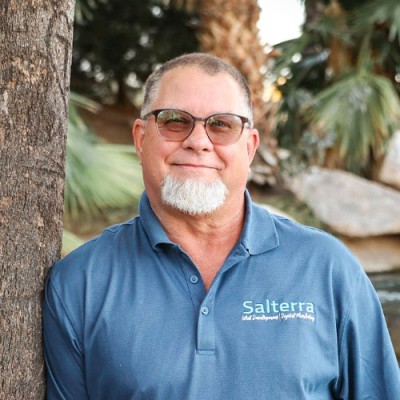
Terry has 30+ years in software and SEO. He’s the founder of Salterra Digital Services and SEO Spring Training, host of the Roundtable SEO Mastermind, and lead instructor at SEO University — teaching the exact tactics his team uses on client work.
Continue learning
Ready to master this?
This guide is one lesson from the Forensic SEO course. Get every lesson, framework and checklist — plus the full 38-course catalog — inside SEO University.
Practitioner-focused training across the full digital marketing stack — from technical SEO to conversion optimization and the AI search era. By Salterra Digital Services, since 2011.