
Zero-Click Strategy Case Study: A Step-by-Step Walkthrough
A zero-click strategy case study is easiest to understand as a sequence of decisions, not a single tactic — audit the SERP landscape, prioritize the winnable features, rebuild content to match how each feature is sourced, then measure visibility instead of clicks. Below is an illustrative walkthrough, modeled on the kind of engagement we run at Salterra, that shows how each phase actually plays out in practice.
- Phase One: Mapping the SERP Before Making Any Changes
- Phase Two: Picking the Battles Worth Fighting
- Phase Three: Fixing the Local Pack First
- Phase Four: Rebuilding Content for Featured Snippets
- Phase Five: Earning the AI Overview Citation
- Phase Six: Measuring What Actually Happened
- What We'd Do Differently
To keep this useful rather than abstract, we’re following a composite scenario: a regional home-services business (call it the client) selling water treatment systems, competing against both national brands and a handful of well-established local competitors. The numbers below are illustrative, not verified client results — they’re included to show the shape of the work, not to claim a specific outcome.
Phase One: Mapping the SERP Before Making Any Changes
The engagement started with a query list — around forty terms spanning informational (“is well water safe to drink”), comparison (“water softener vs. water conditioner”), and local commercial intent (“water softener installation [city]”). For each query, we logged which SERP feature appeared, who currently held it, and how stable that feature had looked over the prior few weeks of manual checks.
The findings were typical of a mid-market local competitor: a national brand held featured snippets on most informational queries with generic, dated content; a competitor with weak Google Business Profile signals still held the local pack through sheer review volume; and AI Overviews were appearing on roughly a third of the informational queries, citing a mix of the national brand and a couple of independent water-quality blogs — never the client.
This mapping did two things. It ruled out chasing every keyword equally, and it revealed that the client’s core problem wasn’t a lack of content — they had blog posts covering most of these topics already — it was that the content wasn’t structured in a way that gave Google or an AI system a clean answer to extract.
Phase Two: Picking the Battles Worth Fighting
With limited hours in the engagement, we ranked opportunities by a simple formula: business relevance times winnability. A featured snippet on “is well water safe to drink” was informational but sat at the top of the funnel that eventually fed installation leads — worth pursuing, but not first. The local pack, where the client was already ranked third with real Google Business Profile activity, was both high-relevance and highly winnable with focused effort — that went first.
- Priority one: local pack position for installation-intent queries in the client’s core service area.
- Priority two: featured snippets on the three highest-volume informational queries feeding the funnel.
- Priority three: AI Overview citation on the comparison-style queries, which required the deepest content rebuild and the longest timeline.
Phase Three: Fixing the Local Pack First
The local pack work was almost entirely off-page and profile-based. We audited the Google Business Profile against the two competitors already ranking above the client and found gaps in service area completeness, a stale photo library, and — the biggest issue — a review response rate under twenty percent compared to competitors responding to nearly every review.
What changed
We rebuilt the services section with the exact phrases customers were using in reviews and search queries, implemented a review request workflow triggered at job completion, and committed the client’s team to responding to every review within 48 hours. None of this touched the website.
Within roughly six weeks, the client moved from third to first position in the local pack for the primary installation query in its core service area — a change driven almost entirely by profile completeness and response velocity, not by any content published on the site.
Phase Four: Rebuilding Content for Featured Snippets
The three informational articles targeted for snippet capture already existed but buried their answers three or four paragraphs deep behind narrative framing. We restructured each one so the first sentence directly and completely answered the query, followed by supporting detail, then a properly formatted list or step sequence where the query implied one (installation steps, comparison criteria, maintenance schedules).
We also added FAQ schema to each page, matched to real People Also Ask questions pulled during the original audit rather than invented questions. This mattered — Google’s snippet and AI systems both appear to favor content that mirrors the actual phrasing of related questions rather than paraphrased or marketing-flavored variants.
Two of the three articles captured featured snippets within the following two months. The third didn’t move — the competitor holding it had a more authoritative domain and a more complete answer, a reminder that structure alone doesn’t overcome a real depth gap.
Phase Five: Earning the AI Overview Citation
This was the slowest-moving priority, and it required more than on-page changes. AI Overviews on the comparison queries were citing sources with clear entity signals — named authors with credentials, consistent information across multiple pages, and in one case a source frequently cited elsewhere on the web. The client’s content had none of that: no author attribution, and thin About and credentials pages.
What changed
We added named author bylines tied to real staff certifications, built out an About page that clearly established the business’s history and expertise, and implemented Organization and Person schema tying it all together. We also encouraged the client to contribute a short expert quote to a regional home-improvement publication, which is exactly the kind of off-site mention that reinforces entity trust for AI systems.
The AI Overview citation didn’t appear until after the entity work had been live for a couple of months — consistent with what practitioners generally observe: AI citation tends to lag behind snippet capture because it depends on broader trust signals accumulating, not just a single page rewrite.
Phase Six: Measuring What Actually Happened
Organic sessions to the informational articles stayed roughly flat through the engagement — expected, since a share of searchers were now getting their answer directly in the snippet or AI Overview without clicking. What moved instead: call tracking numbers tied to the Google Business Profile rose noticeably once the local pack position improved, and branded search volume ticked up over the following months, a common downstream signal of increased zero-click brand exposure.
This is the reporting shift that matters most in a case study like this: the win wasn’t visible in a traffic graph. It was visible in call volume, local pack position, SERP feature ownership, and — eventually — branded search interest. Clients and practitioners who only watch sessions would have missed the entire story.
What We'd Do Differently
In hindsight, the entity-and-author work for the AI Overview priority should have started on day one rather than phase four — those trust signals take the longest to compound, and starting them early would have shortened the overall timeline. This is a lesson worth generalizing: technical and profile fixes move fast, but entity authority is the slow-cooking ingredient in any zero-click strategy, and it should go in the oven first.
Frequently Asked Questions
How long does a zero-click strategy engagement like this typically take to show results?
Local pack and Google Business Profile improvements can show movement within weeks. Featured snippet capture typically takes one to three months depending on competition. AI Overview citation is usually the slowest, often three to six months, because it depends on accumulated entity trust rather than a single content change.
Why didn't organic traffic increase even though visibility clearly improved?
Because a meaningful share of the queries in scope were being answered directly inside SERP features. That's the defining characteristic of zero-click strategy — the goal is visibility and conversion at the point of the search, not necessarily a click to the website.
Could this same approach work for a non-local business?
Yes, with the local pack priority swapped out. E-commerce and B2B sites follow the same audit-prioritize-rebuild-measure sequence, just against comparison queries, product-specific featured snippets, and category-level AI Overview citations instead of a local pack.
What was the single highest-leverage change in this walkthrough?
The Google Business Profile and review response overhaul, both because it moved fastest and because it required no content production — just operational discipline the client could sustain on its own after the engagement.
Is it possible to lose a featured snippet or AI citation after winning it?
Yes, regularly. SERP features rotate as competitors refresh content or as ranking systems re-evaluate sources. Any zero-click strategy needs an ongoing monitoring phase, not a one-time project mentality.
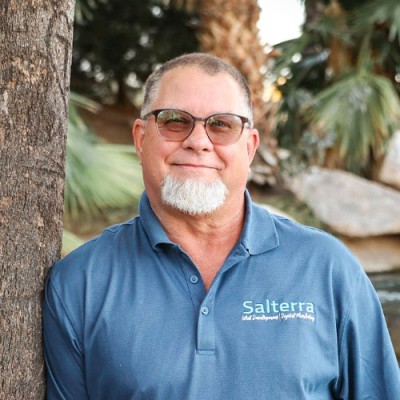
Terry has 30+ years in software and SEO. He’s the founder of Salterra Digital Services and SEO Spring Training, host of the Roundtable SEO Mastermind, and lead instructor at SEO University — teaching the exact tactics his team uses on client work.
Continue learning
Ready to master this?
This guide is one lesson from the Zero-Click Strategy Framework course. Get every lesson, framework and checklist — plus the full 38-course catalog — inside SEO University.
Practitioner-focused training across the full digital marketing stack — from technical SEO to conversion optimization and the AI search era. By Salterra Digital Services, since 2011.