
AI Agent Optimization vs. Traditional SEO: What Works Now
The Short Answer: You Need Both
AI Agent Optimization (AIAO) and traditional SEO solve different problems but share the same foundation. Traditional SEO gets your content indexed and ranked by search engines for human queries. AIAO goes further: it structures your site, data, and brand signals so autonomous AI agents — the kind powering ChatGPT, Perplexity, Google’s AI Overviews, and agentic workflows — can discover you, trust what you say, and take action on your behalf. SEO is the floor. AIAO is what you build on top of it. Drop either, and you leave visibility on the table.
At a Glance
Traditional SEO
- Primary goal: Rank pages for human keyword queries in search engine results pages (SERPs)
- Core signals: Backlinks, keyword relevance, page experience, crawlability, E-E-A-T signals read by ranking algorithms
- Audience: Human searchers arriving through a browser
- Success metrics: Organic rankings, click-through rate, organic traffic, conversions from search
- Time horizon: Weeks to months to see ranking movement
AI Agent Optimization (AIAO)
- Primary goal: Make your site and brand discoverable, understandable, and actionable for autonomous AI agents
- Core signals: Structured data, entity clarity, factual accuracy, machine-readable APIs, verifiable authorship, source citations in LLM training and retrieval pipelines
- Audience: AI agents acting on behalf of users — researching, comparing, purchasing, or summarizing without a human clicking through
- Success metrics: Brand mentions in AI-generated answers, agent task completion rates, citation in retrieval-augmented generation (RAG) sources, zero-click brand presence
- Time horizon: Ongoing; model retraining cycles and retrieval index updates determine when changes surface
Where They Overlap
The overlap is significant — which is exactly why SEO practitioners are best positioned to lead AIAO strategy.
Both disciplines depend on crawlability and indexability. If Googlebot can’t get to your page, an AI crawler likely can’t either. Clean site architecture, fast load times, logical internal linking, and a proper robots.txt still matter — they are entry-level requirements for both.
Both reward E-E-A-T: Experience, Expertise, Authoritativeness, and Trustworthiness. Google’s quality raters look for it; large language models are trained to surface it. Named authors with verifiable credentials, first-hand experience woven into content, and citations to credible sources serve you in both channels.
Both benefit from structured data and schema markup. Schema.org markup — especially Article, Person, Organization, FAQPage, and HowTo — helps search engines understand what your page is about. That same markup helps AI agents extract clean, machine-readable facts about your business without guesswork.
And both penalize thin, templated, or AI-generated-for-volume content. Google’s Helpful Content system and the retrieval pipelines that feed LLMs both reward genuine substance. A page stuffed with keywords but lacking real information hurts you in SERPs and gets deprioritized or ignored by agents pulling authoritative sources.
Where They Diverge
Here is where strategy has to evolve beyond traditional SEO thinking.
Intent and action, not just queries. Traditional SEO is built around query intent: what is the searcher looking for? AIAO is built around agent task intent: what is the agent trying to accomplish? An AI agent booking a hotel room, comparing software vendors, or building a sourced research brief is not clicking through to your homepage — it is extracting structured information and either citing you or passing you over. If your data is buried in unstructured prose, the agent moves on.
Zero-click presence. SEO success has always been measured partly by clicks to your site. AIAO introduces a different kind of win: your brand name, product details, and expertise appearing in an AI-generated answer even when no one clicks. That still builds brand recognition and trust. Measuring it requires different tooling — tracking mentions in AI platforms, monitoring brand citations in AI Overviews, and watching whether agents return to your site as a trusted source.
Machine-readable data layers. Traditional SEO cares about what a human sees on the page. AIAO cares equally about what a machine reads beneath it. This means going beyond basic schema to ensure your APIs are publicly accessible, your knowledge graph entries (Google Business Profile, Wikidata, Crunchbase) are accurate and complete, and your brand entity is unambiguous across the web.
Trust signals at the entity level, not just the page level. In traditional SEO, a strong backlink profile lifts domain authority. In AIAO, trust is built at the entity level: is your business a clearly defined, consistently described entity across multiple authoritative sources? Does your author’s name appear on credible publications with consistent biographical detail? Inconsistencies in how your brand or people are described across the web create entity ambiguity that AI systems resolve by citing someone else.
Why SEO Foundations Still Matter — More Than Ever
Some practitioners frame AIAO as a replacement for SEO. It is not. Here is why the foundation still has to be solid.
Most large language models and retrieval-augmented generation systems pull content from the indexed web. If your content is not indexed and trusted by search engines, it is unlikely to appear in the training data or retrieval pools that AI agents draw from. Search engine trust is a prerequisite for AI agent trust — not the same thing, but the upstream condition that makes AIAO possible.
Organic search traffic still drives significant revenue for most businesses. AI-generated answers and agentic workflows are growing fast, but human searchers who click through to read, compare, and decide are not disappearing. You optimize for both channels or you cede ground in one of them.
And the technical discipline of SEO — crawl efficiency, page speed, logical site structure, clean HTML — directly enables the machine readability that AIAO demands. Teams that have already done the SEO engineering work have a head start on AIAO implementation. Those that have not are behind in both channels.
A Combined Strategy: What to Do Now
For practitioners managing real sites today, the integrated approach looks like this:
- Audit your entity clarity first. Google your brand name, your authors’ names, and your core products. Are the descriptions consistent? Are the knowledge panels populated and accurate? Fix entity ambiguity before anything else — it is foundational to both channels.
- Expand schema beyond the basics. If you have Article and BreadcrumbList, add Person schema with verifiable sameAs links, Organization schema with full contact and identifier data, and FAQPage schema on every relevant content page.
- Write for extraction, not just for reading. Structure content so key facts, definitions, and comparisons appear in clearly marked, short paragraphs that an AI can lift verbatim and cite accurately. Use descriptive H2s and H3s. Put the answer first.
- Build topical authority systematically. Depth across a defined topic cluster tells both search engines and AI agents that you are the authoritative source on a subject. A single strong article is not enough — you need the full silo.
- Monitor your AI presence, not just your rankings. Start querying ChatGPT, Perplexity, and Google AI Overviews for your target topics. Are you cited? Is the information about you accurate? Correct inaccuracies at the source — your own site, your knowledge graph entries, and authoritative third-party listings.
- Keep earning real links from credible sources. Backlinks remain an important trust signal for search engines, and they function as an indirect trust signal for AI systems that index the web to build their training sets and retrieval pools.
The practitioners who will win the next five years of search are not choosing between traditional SEO and AI Agent Optimization. They are building expertise in both, treating them as one integrated discipline with shared foundations and distinct tactics for each distribution channel.
If you want a structured path through both — from technical SEO fundamentals to AIAO implementation — Salterra University is where Terry Samuels teaches it directly, with practitioner-level depth and no filler.
Frequently Asked Questions
Is AI Agent Optimization a replacement for traditional SEO?
No. AIAO extends traditional SEO — it does not replace it. Search engine indexing and trust are upstream conditions for AI agent visibility. If your site lacks solid technical SEO, clean content architecture, and genuine E-E-A-T signals, AI agents are unlikely to discover or cite you either. Build the SEO foundation first, then layer in AIAO-specific tactics like expanded schema, entity clarity, and machine-readable data.
How do I know if AI agents are finding and citing my business?
Start by querying the major AI platforms — ChatGPT, Perplexity, Google AI Overviews, and Bing Copilot — with your target keywords and brand name. Note whether you are cited, and whether the information pulled about you is accurate. Tools for systematic brand mention monitoring in AI-generated content are emerging quickly. Track this manually at first, then build it into your regular reporting cadence.
Does schema markup really influence what AI agents say about my business?
Yes, meaningfully. Structured data gives AI systems unambiguous, machine-readable facts about your business, products, people, and content. Without it, agents have to infer those facts from unstructured prose — introducing errors and reducing citation confidence. FAQPage, Person, Organization, and Article schema are the highest-priority types for most business sites pursuing AIAO visibility.
How long does it take to see results from AIAO efforts?
The timeline is less predictable than traditional SEO because it depends on model retraining cycles, retrieval index update schedules, and how frequently AI platforms refresh their knowledge. Structural changes — schema implementation, entity cleanup, content restructuring — can surface in retrieval-augmented systems within weeks. Influence on large language model training data is slower and tied to when models are next updated with new web data.
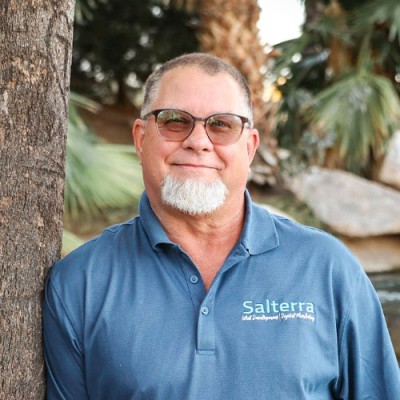
Terry has 30+ years in software and SEO. He’s the founder of Salterra Digital Services and SEO Spring Training, host of the Roundtable SEO Mastermind, and lead instructor at SEO University — teaching the exact tactics his team uses on client work.
Continue learning
Ready to master this?
This guide is one lesson from the AI Agent Optimization course. Get every lesson, framework and checklist — plus the full 38-course catalog — inside SEO University.
Practitioner-focused training across the full digital marketing stack — from technical SEO to conversion optimization and the AI search era. By Salterra Digital Services, since 2011.