
How to Build a Winning Original Research Content Strategy
A winning original research content strategy is a recurring program, not a one-off project — it pairs a research topic tightly aligned to your brand’s actual expertise with a sustainable cadence, the right methodology for your resources, and a distribution plan built before the first data point is collected. Treat it like a franchise you’re building over multiple cycles, and the compounding authority becomes a moat competitors can’t quickly copy.
- Choose a Research Theme That Matches Your Real Authority
- Build a Recurring Cadence, Not a One-Time Report
- Match Methodology to What You Can Actually Sustain
- Build the Team and Workflow to Sustain It
- Integrate Research Into Your Broader Content and Topical Authority Strategy
- Plan Distribution and PR Before You Collect a Single Data Point
- Protect and Reuse the Data Across Every Format You Own
Most teams that try original research once, get a modest traffic bump, and never repeat it are leaving the real value on the table. The strategic payoff — recognized ownership of a data narrative in your niche — only shows up after two or three cycles. This is the planning framework Salterra Digital Services has used with clients since 2011 to turn a single research report into a durable, budget-justifiable program.
Choose a Research Theme That Matches Your Real Authority
The single biggest strategic decision is topic selection, and it’s where most programs go wrong. The right theme sits at the intersection of three things: a question your audience genuinely wants answered, data you have a credible, defensible way to collect, and a topic close enough to your core offering that owning the narrative also builds commercial authority. Research that’s interesting but unrelated to what you sell earns links without earning trust in your expertise.
Test a candidate theme against a simple filter: could a journalist, analyst, or competitor plausibly cite your business as the source on this specific question a year from now? If the honest answer is no — the topic is too broad, too far from your niche, or too easily replicated by a bigger player with more data access — narrow it. A tightly scoped theme you can own outperforms a broad one you can only visit once.
Resist the pull toward a trendy topic with a short shelf life. A theme built around a durable, recurring question in your industry gives you something to measure again next cycle, which is what turns a single report into a franchise.
Build a Recurring Cadence, Not a One-Time Report
The strategic leverage in original research comes almost entirely from repetition. A single “State of X” report is a nice asset; an annual or biannual “State of X” report that tracks the same core metrics over time becomes a franchise journalists watch for, competitors get compared against, and your own sales team references by name. The second and third editions cost less to produce than the first — the methodology, respondent list, and distribution contacts are already built — while the credibility and pickup compound.
Set the cadence realistically against your team’s capacity. An annual flagship report anchors the program; smaller quarterly pulse updates or mini-analyses using the same dataset keep the topic visible between flagship releases without requiring a full research cycle each time. Decide this rhythm during initial planning, not after the first report ships — a program built with the second edition already scheduled behaves very differently than one hoping there’ll be a next time.
Lock the comparable metrics early
If the goal is a recurring franchise, define upfront which core questions or metrics will stay identical across every edition. Changing the methodology or core questions every cycle breaks the year-over-year comparison that makes repeat research valuable, so build in room for new questions around a stable core rather than reinventing the survey each time.
Match Methodology to What You Can Actually Sustain
Choosing a methodology tier is a resourcing decision as much as a research one, and picking a tier you can’t sustain is a common way programs stall after one cycle.
- Proprietary data analysis: Mining your own product, customer, or platform data for patterns no one else can see. Lowest external cost, highest defensibility — no competitor has your dataset — but only available to businesses with enough data volume to produce statistically meaningful findings.
- Original surveys: Fielding a survey to a defined audience segment. Flexible and repeatable, but quality depends entirely on sample size, panel quality, and honest methodology disclosure — a small or skewed sample undermines the credibility the whole program depends on.
- Expert panel or Delphi-style research: Structured input from a curated group of named practitioners. Lower sample size requirements than a public survey, strong credibility from named contributors, but requires real relationship-building to recruit and retain panelists across cycles.
- Crowdsourced or aggregated public data: Compiling and analyzing publicly available data others haven’t synthesized. Fast and cheap to start, but the analysis and interpretation — not just the compilation — has to be the differentiator, or it reads as a rehash.
Choose the tier that matches your actual, ongoing capacity — not the most impressive-sounding one. A modest proprietary-data analysis you can repeat every year beats an ambitious survey you can only afford to run once.
Build the Team and Workflow to Sustain It
Original research programs die most often from unclear ownership, not bad ideas. Someone specific needs to own the program end to end — usually a strategist or content lead, not a rotating committee — accountable for the cadence, not just the first edition’s launch.
A sustainable workflow typically splits across a few functions: someone who owns data collection and methodology integrity, a writer who can translate findings into a clear narrative (this is a distinct skill from general content writing — it requires comfort interpreting data honestly, including inconvenient results), a designer for charts and the report asset itself, and a distribution or PR owner responsible for pitching, not just publishing. On a small team these roles combine, but each function needs an explicit owner or it quietly falls through the cracks under deadline pressure.
Document the workflow after the first cycle — what worked, what took longer than planned, which distribution channels actually produced pickup — so the second edition runs from a playbook instead of starting from zero again.
Integrate Research Into Your Broader Content and Topical Authority Strategy
Original research shouldn’t sit in isolation from the rest of your content plan — it works best as the pillar at the center of a topic cluster. The flagship report becomes the anchor page; individual findings, cross-tabs, and follow-up questions each become supporting articles that link back to the pillar and to each other, extending the life of the research far past its launch week.
This integration also strengthens your topical authority signal to both traditional search and AI answer engines. A cluster built around genuine proprietary data — rather than synthesized commentary on other people’s findings — gives AI Overviews, ChatGPT, and Perplexity a citable, original source to reference, which is exactly the kind of content these systems are built to reward over derivative summaries. Plan the supporting-article list at the same time you plan the research itself, so the cluster ships together instead of trickling out unplanned.
Plan Distribution and PR Before You Collect a Single Data Point
Distribution planned as an afterthought is the most common way strong research underperforms. Build the distribution plan alongside the research design: which journalists, industry newsletters, and podcast hosts cover this topic; which internal stakeholders (sales, executive leadership) need early access to findings for their own outreach; and which social and community channels are the right fit for which specific findings.
Draft your PR angles and target reporter list during the planning phase, not after the report is finished. Journalists and analysts need lead time, and the single most effective distribution tactic — offering select reporters a preview or embargo window before public release — only works if it’s built into the timeline from the start rather than bolted on the week of launch.
Protect and Reuse the Data Across Every Format You Own
A single dataset should fund far more content than the flagship report alone. Plan from the outset to repurpose findings into a blog post series breaking out individual data points, social graphics for each key stat, a condensed one-pager for sales collateral, quotable stats for outreach and guest-post pitches, and a webinar or presentation deck walking through the findings for prospects and partners.
This reuse plan is also a moat-building decision. Competitors can eventually copy your topic, but they can’t retroactively copy your first-mover dataset, your accumulated multi-year trend line, or the relationships built with journalists and panelists across editions. The strategic asset isn’t any single report — it’s the compounding, hard-to-replicate history of owning the narrative on a specific question over time.
Frequently Asked Questions
How often should a business publish original research to build a real content moat?
An annual flagship report with lighter quarterly updates in between is a sustainable pace for most teams — what matters more than exact frequency is a consistent, predictable cadence the audience and press can come to expect.
What's the biggest mistake teams make when planning an original research strategy?
Treating it as a single project instead of a recurring program — publishing one report, seeing a modest bump, and never repeating it, which forfeits the compounding credibility that comes from a multi-cycle franchise.
Which research methodology should a small business start with?
Start with whichever tier matches sustainable ongoing capacity, not the most impressive option — proprietary analysis of existing customer or product data is often the lowest-cost, most defensible starting point for smaller teams.
Who should own an original research program internally?
One accountable owner, usually a content or strategy lead, responsible for the full cadence rather than a single launch — research programs with rotating or unclear ownership tend to stall after the first edition.
How does original research fit into a broader topical authority strategy?
The flagship research piece functions as pillar content, with individual findings and follow-up questions built out as supporting articles that link back to it — this extends the research's relevance and gives both search engines and AI answer engines a clear, citable topic cluster.
Should distribution and PR be planned before or after the research is complete?
Before — building the journalist and stakeholder outreach plan alongside the research design, including any embargo or preview strategy, produces meaningfully better pickup than treating distribution as a step that starts after the report is finished.
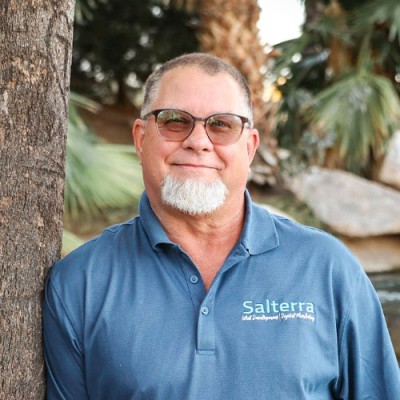
Terry has 30+ years in software and SEO. He’s the founder of Salterra Digital Services and SEO Spring Training, host of the Roundtable SEO Mastermind, and lead instructor at SEO University — teaching the exact tactics his team uses on client work.
Continue learning
Ready to master this?
This guide is one lesson from the Original Research & Data as a Content Moat course. Get every lesson, framework and checklist — plus the full 38-course catalog — inside SEO University.
Practitioner-focused training across the full digital marketing stack — from technical SEO to conversion optimization and the AI search era. By Salterra Digital Services, since 2011.