
Advanced SEO Case Study: A Step-by-Step Walkthrough
An advanced SEO engagement rarely starts with a keyword list. It starts with a business that’s stuck: traffic has plateaued, a redesign quietly tanked rankings, or a site that “used to rank for everything” has slid into irrelevance. What follows is a composite walkthrough — built from patterns Salterra Digital Services has seen repeatedly since 2011, not a single named client — showing how an engagement like this unfolds from diagnosis through execution to outcome.
Every real engagement has its own quirks, but the sequence below — audit, hypothesis, prioritization, remediation, content and links, then monitoring — is the shape almost all of them take once you strip out the client-specific noise.
The Starting Point
Picture a mid-sized B2B services site: a few hundred pages, a decade of content accumulated under three different content managers, and a migration to a new CMS about eighteen months prior. Organic sessions had been flat to declining for over a year. Paid search was picking up the slack, and the marketing team’s working theory was “we need more content.”
That theory turned out to be half right and half a distraction. More content wasn’t the problem. Undiagnosed technical debt and a content library that no longer matched what people were actually searching for — that was the problem. This is a common trap: teams reach for content production before they’ve confirmed the site can actually earn and keep rankings for what it publishes.
Diagnosing the Real Problem
The audit phase combined three lenses, run in parallel rather than sequentially, because technical, content, and link issues tend to compound each other.
The Technical Crawl
A full Screaming Frog crawl, cross-checked with Sitebulb for its visual crawl maps and hierarchy reports, surfaced the usual suspects plus a few nastier ones:
- Roughly 15% of indexable pages carried a self-referencing canonical pointing to a URL parameter variant, effectively splitting equity across duplicate versions.
- The post-migration redirect map was incomplete — a batch of category pages from the old CMS 404’d or chained through three hops before resolving.
- Core Web Vitals were inconsistent across templates; one high-value template was shipping unoptimized hero images that pushed Largest Contentful Paint well past the “needs improvement” threshold.
- An orphaned section of the site — about 40 pages — had no internal links pointing to it at all, discovered only because it still appeared in the XML sitemap.
A server log file analysis (pulling raw logs and running them through a log analyzer) confirmed what the crawl implied: Googlebot was spending a disproportionate share of its crawl budget on faceted navigation URLs and pagination, and almost none on the newer cornerstone pages the team was proudest of.
The Content and Backlink Picture
On the content side, a gap analysis in Ahrefs and Semrush compared the site’s ranking footprint against three real competitors. The site ranked well for branded and legacy terms but had almost no presence for newer, higher-intent queries the competitors had captured over the previous two years. Cross-referencing Google Search Console query data confirmed the site was getting impressions for those terms — it was showing up on page two or three — without ever converting that visibility into clicks.
The backlink profile told its own story: a healthy base of legitimate links from the company’s earlier years, alongside a cluster of low-quality directory and guest-post links from a previous agency’s link-building push. None of it was severe enough to warrant a disavow file on its own, but it wasn’t helping, and it wasn’t the kind of link profile that supports competing for harder terms.
Forming a Hypothesis
With the audit data in hand, the working hypothesis was straightforward: the site wasn’t losing because it lacked content volume — it was losing because crawl budget, internal linking, and topical structure were all working against the pages that mattered most, while the content library had drifted away from current search intent.
That hypothesis mattered because it changed the plan. Instead of a content sprint, the first quarter of the engagement was almost entirely technical and structural. Content production didn’t ramp up until the foundation could actually support it.
Prioritizing What to Fix First
Not every finding gets fixed in the order it was discovered. We ranked issues against two axes: estimated impact on crawlability/rankings, and effort to implement, then sequenced around dependencies — for example, fixing canonicals had to happen before consolidating thin content, or the consolidation would target the wrong URLs.
- Fix now: broken redirect chains, incorrect canonicals, and the orphaned page cluster — high impact, low-to-moderate effort, and blocking everything downstream.
- Fix next: Core Web Vitals on the highest-traffic template, and internal link architecture.
- Plan and phase: content consolidation and expansion, which needed research before execution.
- Deprioritize: a full backlink disavow, since the toxic links weren’t triggering any visible penalty and disavowing carries its own risk if done carelessly.
Technical Remediation
Execution started with the redirect map: every broken and chained redirect from the migration was rebuilt to point directly at its final destination, not through intermediate hops. Canonical tags were corrected so parameterized and duplicate URLs consolidated properly to their primary versions, and the orphaned 40-page cluster was either merged into related sections with proper internal links or pruned if it no longer served a purpose.
On performance, the fix wasn’t “compress everything” — it was targeted: converting the hero images on the worst-offending template to modern formats, deferring non-critical JavaScript, and fixing a render-blocking font load that was quietly costing hundreds of milliseconds on every page load. We re-crawled after each batch of changes rather than waiting until the end, specifically to catch new issues before they compounded.
Rebuilding Topical Authority
With the technical foundation stabilized, the content phase began — not as a volume push, but as a structured rebuild. Existing content was audited page by page: keep as-is, refresh, consolidate with overlapping pages, or retire. Several old posts covering the same narrow topic from slightly different angles were merged into single, stronger resources rather than left to compete with each other.
New content filled the gaps the Ahrefs/Semrush comparison had surfaced, organized into a proper topic cluster: a pillar page for the core service area, supported by spoke content addressing the specific sub-questions and comparison queries the competitor analysis had flagged. Every new piece was written to actually answer the query, not to hit a word count — a distinction that matters more with each Helpful Content Update, and one Salterra treats as non-negotiable regardless of which client we’re working with.
Earning the Right Links and Structured Data
Link earning followed the content, not the other way around. Once the pillar pages existed, outreach focused on a small number of relevant industry publications and partner sites rather than volume-based guest posting — the kind of links that come from having something genuinely worth citing. Digital PR played a role too: one piece of original research the client’s team had never bothered to promote turned out to be link-worthy once it was packaged properly and pitched to relevant trade outlets.
In parallel, structured data was added or corrected across the site — Organization and Person schema for author bios, FAQPage markup on genuinely FAQ-format content, and Article schema on blog content. This wasn’t cosmetic. Clean structured data makes it easier for both traditional search features and AI systems — AI Overviews, chatbot citations — to correctly parse and represent the content, which matters increasingly as more discovery happens through zero-click and AI-mediated surfaces rather than a classic ten blue links results page.
Monitoring, Iteration, and the Long Tail
None of this was “set it and forget it.” Google Search Console and GA4 were checked weekly for the first few months, watching indexation status on updated URLs, crawl stats, and which query clusters were starting to move. Ahrefs and Semrush rank tracking ran alongside to catch movement on the priority term list before it showed up meaningfully in traffic.
The pattern that emerged is a familiar one to anyone who’s run engagements like this: nothing moved dramatically in the first six to eight weeks. Then, as re-crawling caught up with the technical fixes and the new content began to earn its own links and internal equity, organic visibility climbed steadily over the following months. The site began ranking for terms it had never touched before, impressions for previously stuck queries started converting into actual clicks, and pages that had been buried on page three started surfacing on page one — not overnight, and not uniformly across every page, but in a clear directional trend that held up over time.
What Changed and What We Learned
A few lessons from this pattern show up in nearly every advanced engagement we run. First: fix the foundation before scaling content. Publishing more onto a site with crawl and indexation problems just produces more pages competing for the same limited crawl attention. Second: a backlink profile with some low-quality links isn’t automatically an emergency — spend the effort where it actually moves the needle instead of chasing a disavow that may do nothing.
Terry Samuels’ take on this, after years of running audits that look almost identical in structure even when the industries are completely different: the sites that recover fastest are the ones where the team stops treating SEO as a checklist and starts treating it as an ongoing diagnostic process. The audit isn’t a one-time event you complete before “real work” begins — it’s the same lens you keep applying, quarter after quarter, as the site, the algorithm, and the SERP itself keep changing underneath you.
Frequently Asked Questions
How long does an advanced SEO engagement like this typically take to show results?
Technical fixes can be confirmed within weeks once search engines recrawl the affected pages, but meaningful ranking and traffic movement generally takes several months, since it depends on re-indexation, content earning authority, and links accumulating naturally over time.
Why prioritize technical fixes before adding new content?
If crawlability, canonicalization, or internal linking issues are actively working against a site, new content inherits the same problems and struggles to get properly indexed and ranked, wasting the effort that went into producing it.
Is a backlink disavow always part of cleaning up a toxic link profile?
No. Disavowing is a targeted tool for links causing demonstrable harm, not a default step. Many low-quality links sit quietly without triggering any visible penalty, and disavowing carelessly can remove context search engines were already discounting on their own.
How do AI Overviews and AI chatbots change this kind of engagement?
They raise the bar on clarity and structure. Content that directly answers a question, is well-organized under proper headings, and carries accurate structured data is more likely to be parsed and cited correctly by AI-driven search features, so those elements get more deliberate attention than they might have in the past.
What's the biggest mistake teams make before calling in an advanced audit?
Assuming the fix is "more content" without first confirming the site can actually crawl, index, and rank what it already has. Volume without a sound foundation rarely solves a plateau on its own.
Does this walkthrough reflect one specific Salterra client?
No. It's a composite scenario built from patterns and issues Salterra Digital Services has encountered repeatedly across real engagements since 2011, illustrating the process rather than reporting on a single case.
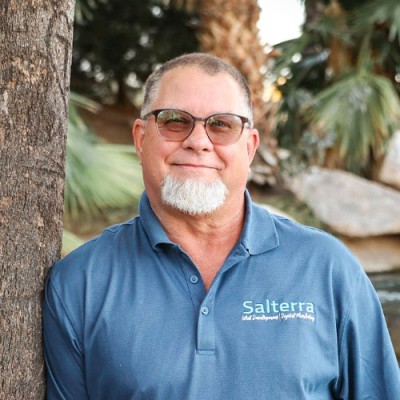
Terry has 30+ years in software and SEO. He’s the founder of Salterra Digital Services and SEO Spring Training, host of the Roundtable SEO Mastermind, and lead instructor at SEO University — teaching the exact tactics his team uses on client work.
Continue learning
Ready to master this?
This guide is one lesson from the Advanced SEO Techniques course. Get every lesson, framework and checklist — plus the full 38-course catalog — inside SEO University.
Practitioner-focused training across the full digital marketing stack — from technical SEO to conversion optimization and the AI search era. By Salterra Digital Services, since 2011.