
WordPress SEO Case Study: A Step-by-Step Walkthrough
What follows is an illustrative walkthrough, not a documented client engagement — we’ve built it from patterns we see repeatedly at Salterra Digital Services so you can watch a WordPress SEO fix-up unfold from first audit to measurable-in-spirit outcome. Think of it as a composite: the symptoms, the diagnostic order, and the fix sequence are all things you’ll recognize from real sites, but the site itself and its numbers are a teaching device, not a case file.
The lesson underneath the story matters more than the story: WordPress sites tend to accumulate the same handful of SEO problems, and they tend to respond well to being fixed in a specific order. Get that order wrong and you waste weeks. Get it right and most of the gains compound within a single crawl-and-reindex cycle.
The Site and the Problem
Our illustrative subject is a 140-page WordPress site for a regional home-services company — think a plumbing or HVAC business with a blog, a handful of service pages, and location pages for three nearby towns. It’s five years old, built on a page builder, running a grab-bag of plugins accumulated over multiple freelancers. Traffic has been flat for eighteen months. Rankings for its core service terms sit on page two. The owner’s complaint is the one we hear constantly: “we publish content and nothing happens.”
That complaint is almost never about content quality alone. It’s usually a symptom of a site that’s fighting itself technically while the content team keeps adding more pages on top of the mess.
The Audit
We start every engagement the same way: crawl before we touch anything. A full crawl plus a manual pass through Search Console coverage reports typically surfaces four or five compounding issues rather than one dramatic one. In this scenario, the audit turns up:
- Duplicate title tags across service pages because the theme’s default title format was never overridden.
- No canonical strategy — paginated blog archives, tag pages, and print-friendly URLs are all indexable and competing with the real pages.
- A robots.txt left over from a staging migration, partially blocking CSS and JS.
- Images averaging 400KB or more with no lazy loading, no compression, and missing alt text on roughly 70% of them.
- Zero structured data beyond the theme’s automatic (and slightly wrong) Organization markup.
- An XML sitemap that hadn’t been resubmitted since the site’s last redesign and still referenced deleted URLs.
None of these individually would tank a site. Stacked together, they explain flat traffic perfectly: Google is spending crawl budget on junk, splitting authority between duplicate versions of the same page, and struggling to understand what the pages are even about.
Technical Fixes
We fix technical issues before content issues, always. Content improvements can’t be measured accurately if the technical layer is still corrupting how pages get crawled and indexed.
Cleaning Up Titles and Metadata
The first move is installing and properly configuring SEOPress, setting a title and meta description template per content type — services, locations, blog posts — so new pages inherit sane defaults instead of the theme’s generic pattern. Existing pages get hand-written titles and descriptions in priority order: the money pages (services and locations) first, cornerstone blog content second, everything else last.
Fixing Canonicalization and Crawl Waste
SEOPress’s canonical controls get set to point paginated and parameter-driven URLs back to their parent pages. Tag archives that were never meant to rank get noindexed rather than deleted, since some had picked up a handful of backlinks over the years. The stale robots.txt gets rewritten to allow CSS and JS so Google can render the page the way a visitor actually sees it.
Regenerating the Sitemap
SEOPress’s XML sitemap module replaces the orphaned one, and it’s resubmitted in Search Console. This alone tends to accelerate discovery of anything that changes downstream — it’s the fastest lever available and it’s often ignored.
Content and Schema
With the technical layer stable, content gets triaged into three buckets: pages that are thin and need real expansion, pages that are fine but missing structured data, and pages that should be merged or retired because they’re cannibalizing each other. In this scenario, two blog posts and a service page were all loosely targeting the same “emergency plumber near me” intent — a classic cannibalization pattern on WordPress sites where every new post targets whatever keyword sounded good that week instead of following a deliberate map.
The fix is consolidation, not deletion: the strongest of the three becomes the canonical page, the other two get folded into it with 301 redirects, and internal links across the site get repointed. Schema comes next. Using SEOPress’s schema generator, we add LocalBusiness markup with accurate NAP data, Service schema on each service page, and FAQ schema built from the actual questions the owner says customers ask on the phone — not invented questions, real ones, because that’s the difference between markup that earns a rich result and markup that just adds bloat. In an AI-search era where answer engines are pulling structured, well-labeled content directly into summaries, that kind of precise, source-honest markup does double duty: it helps traditional rankings and it makes the page more quotable to an AI Overview or assistant.
Speed and Core Web Vitals
Image weight is the single biggest lever on a site like this. Bulk compression, conversion to modern formats, and lazy loading below the fold typically cut page weight dramatically without any visible quality loss. A caching plugin gets configured properly — not just installed and left on defaults — along with deferring non-critical JavaScript and trimming plugin bloat (in this scenario, four plugins duplicating functionality already covered by SEOPress or the theme get removed entirely). The goal isn’t a perfect Lighthouse score; it’s getting Largest Contentful Paint and Cumulative Layout Shift out of the “poor” band in Search Console’s Core Web Vitals report, because that’s the threshold that actually correlates with ranking friction.
Indexing
Once fixes are live, we don’t wait passively for Google to notice. Priority URLs — the consolidated service page, the newly schema-marked location pages — get submitted through URL Inspection for manual indexing requests. The regenerated sitemap gets checked daily for a few days to confirm the new canonical structure is actually being read correctly and old duplicate URLs are dropping out of the index rather than lingering. This is also where you catch mistakes: a canonical pointed the wrong direction, a noindex tag left on a page that should be live. Checking indexing status early is cheap insurance against weeks of confusion later.
Outcomes
Here’s where we’re careful with language, because it’s tempting to hand you a tidy percentage and call it proof. We won’t. In an illustrative scenario like this one, the honest way to describe outcomes is qualitative and directional: sites that go through this sequence — technical cleanup, canonicalization, schema, speed, deliberate indexing — typically see de-duplicated pages start ranking as a single stronger entity rather than three weak competitors, Core Web Vitals reports move out of the red, and previously-invisible pages start appearing in Search Console’s performance report within a few weeks as Google recrawls the cleaned-up structure. If you run this playbook on your own site and want a number, use your own before-and-after Search Console data — that’s the only figure that’s actually true.
Lessons
The pattern worth taking away isn’t the specific fixes — it’s the order. Technical foundation first, because content and schema improvements built on a broken crawl are wasted effort. Consolidation before expansion, because adding more content to a site that’s already cannibalizing itself just adds more competitors to the pile. Schema built from real answers, not guessed keywords, because that’s what holds up whether the reader is a person or an AI system summarizing your page. And indexing as an active step, not something you assume happens automatically. Most WordPress SEO “case studies” you’ll read skip straight to a screenshot of a traffic graph. The graph is the least interesting part — the sequence that produced it is the part you can actually reuse.
Frequently Asked Questions
Is this a real client result?
No. This is an illustrative, composite scenario built from patterns we see repeatedly across WordPress SEO engagements. It's designed to teach the diagnostic and fix sequence, not to report verified numbers from a named client.
Why fix technical SEO before writing new content?
Because content improvements are unmeasurable and often wasted if the technical layer is still causing duplicate indexing, blocked resources, or broken canonicals. Fix the foundation first so every content change afterward has a clean signal to work with.
What role does SEOPress play in a walkthrough like this?
SEOPress handles the mechanical layer — title and meta templates, canonical tags, XML sitemaps, and schema generation — so the practitioner's time goes into judgment calls like consolidation and real FAQ content instead of hand-coding markup.
How do I know if my own WordPress site has cannibalization?
Search Console's Performance report is the fastest check: filter by a target query and look for multiple URLs from your own site both getting impressions for it. That's the signal to consolidate rather than keep publishing more pages on the same topic.
Does structured data actually matter if I'm not chasing rich results?
Yes, increasingly so. Beyond rich snippets, clean schema helps AI-powered search features extract and summarize your content accurately, which matters even when a click never happens.
What's the fastest lever in a technical cleanup like this?
Regenerating and resubmitting the XML sitemap. It's a five-minute task that often accelerates how quickly Google notices every other change you make afterward.
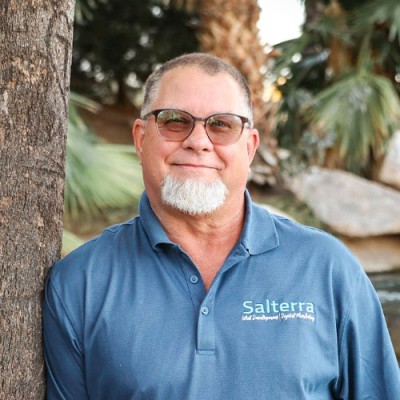
Terry has 30+ years in software and SEO. He’s the founder of Salterra Digital Services and SEO Spring Training, host of the Roundtable SEO Mastermind, and lead instructor at SEO University — teaching the exact tactics his team uses on client work.
Continue learning
Ready to master this?
This guide is one lesson from the WordPress SEO Optimization — SEOPress Pro Edition course. Get every lesson, framework and checklist — plus the full 38-course catalog — inside SEO University.
Practitioner-focused training across the full digital marketing stack — from technical SEO to conversion optimization and the AI search era. By Salterra Digital Services, since 2011.